







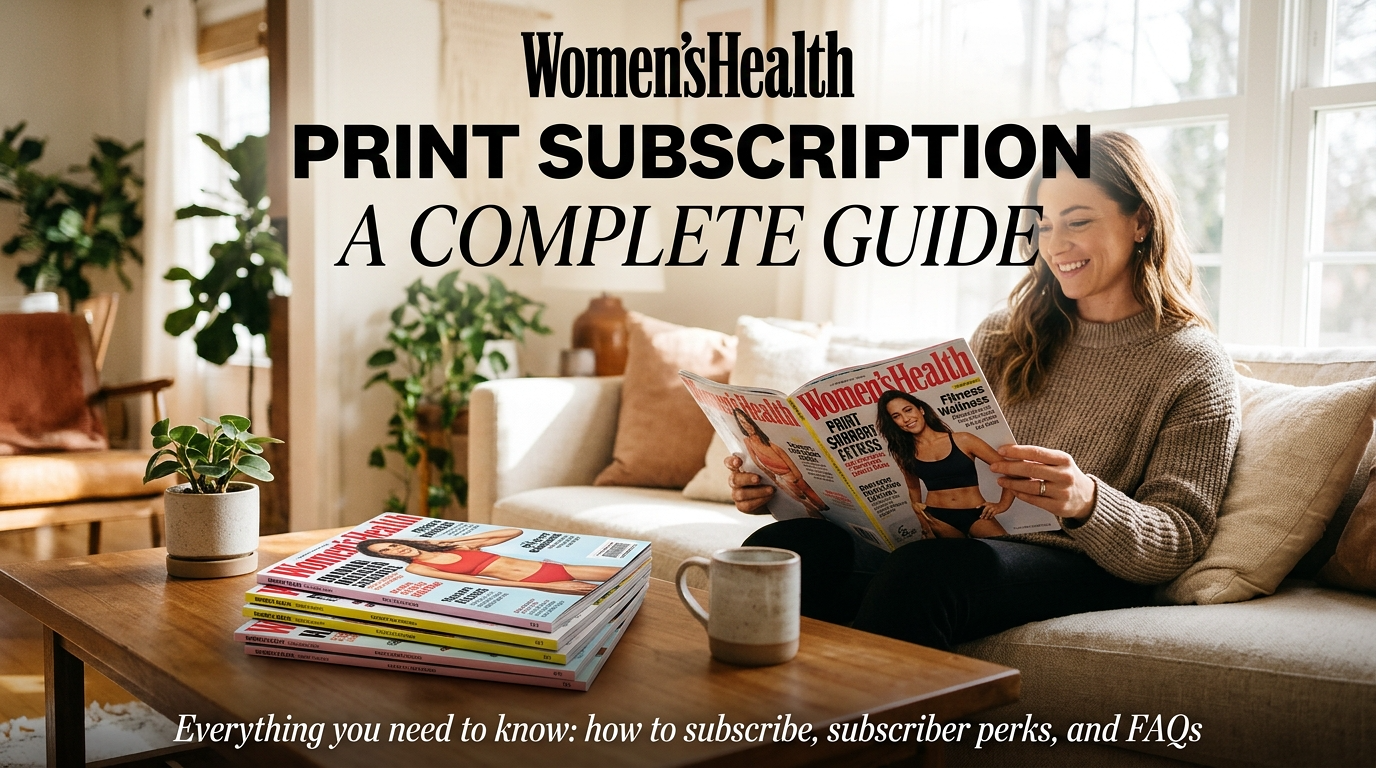
Taking care of your health is a lifelong journey, and having access to reliable, informative, and inspiring health content can make that journey more enjoyable. From fitness and nutrition to mental well-being, reproductive health, skincare, and healthy aging, women benefit from information that addresses their changing needs at every stage of life. This is one reason a Women’s Health magazine print subscription can be an appealing choice for readers who enjoy learning through traditional magazines.
Although digital publications and online health resources have become increasingly popular, printed magazines continue to offer a distinctive reading experience. They provide carefully organized articles, attractive photography, practical advice, and interesting features in a convenient physical format. Instead of constantly checking a screen or scrolling through online content, readers can enjoy a magazine during a quiet morning, a relaxing afternoon, or a break from their daily responsibilities.
A subscription can also make it easier to discover new perspectives on wellness without searching for individual articles every time. Whether someone is interested in improving their fitness routine, understanding nutrition, exploring mental health topics, or developing healthier everyday habits, a women’s health publication can provide useful inspiration.
This guide explores what to expect from a women’s health magazine print subscription, the topics commonly covered, the benefits of printed publications, subscription considerations, and how to choose an option that matches your interests and reading preferences.
What Is a Women’s Health Magazine Print Subscription?
A women’s health magazine print subscription is a recurring arrangement that allows readers to receive physical copies of a health and lifestyle publication at their selected mailing address. Depending on the publisher and subscription package, readers may receive issues monthly, several times a year, or according to another publication schedule.
These magazines generally focus on subjects that influence women’s physical, emotional, and overall well-being. Their editorial content may include expert interviews, educational articles, exercise recommendations, nutrition guidance, beauty features, and lifestyle stories.
Unlike general entertainment magazines, women’s health publications are often designed around practical information that readers can apply to their everyday lives.
A typical issue may include:
- Fitness routines for different experience levels.
- Nutrition advice and healthy eating ideas.
- Information about women’s reproductive health.
- Mental health and emotional wellness discussions.
- Skincare and personal care recommendations.
- Sleep improvement and stress management strategies.
- Interviews with healthcare professionals.
- Healthy aging and preventive wellness information.
- Lifestyle features and personal experiences.
The exact content depends on the publication, its editorial direction, and the interests of its audience.
Why Choose a Printed Women’s Health Magazine?
Digital content is convenient, but printed magazines offer several advantages that continue to attract dedicated readers. A physical publication creates a different relationship with information because it encourages a more focused and intentional reading experience.
1. A More Relaxing Reading Experience
Many people spend several hours each day using smartphones, computers, and other digital devices. Constant notifications and screen time can make it difficult to concentrate on longer articles.
A printed magazine provides an opportunity to step away from digital distractions. Readers can sit comfortably, turn through the pages, and explore topics at their own pace.
This simple habit can make reading feel like a relaxing personal activity rather than another task involving technology.
2. Convenient Access to Health Information
One of the main attractions of a health magazine is the variety of subjects covered in a single publication.
Instead of visiting multiple websites to find information about exercise, nutrition, skincare, and mental wellness, readers can discover different subjects within one issue.
Well-organized articles also make it easier to revisit interesting features, save useful pages, and share relevant information with friends or family members.
3. Practical Fitness and Wellness Inspiration
Maintaining healthy habits can sometimes feel challenging, especially when everyday responsibilities become demanding.
Women’s health magazines often feature approachable exercise ideas, healthy meal inspiration, motivational stories, and suggestions for building sustainable routines.
These features can encourage readers to make small improvements, such as walking more frequently, preparing balanced meals, improving sleep habits, or setting realistic fitness goals.
4. A Physical Collection of Useful Articles
A printed subscription can gradually create a personal collection of health and lifestyle resources.
Readers may keep particular issues for future reference, organize them by subject, or save articles that contain helpful information.
For example, someone interested in healthy cooking might keep issues featuring nutritious recipes, while another reader may prefer articles about strength training, stress management, or skincare.
5. An Enjoyable Gift for Health-Conscious Readers
A magazine subscription can also be a thoughtful gift for someone who enjoys reading about wellness and lifestyle subjects.
It offers something to look forward to throughout the subscription period and introduces the recipient to fresh ideas and editorial features.
Before purchasing a subscription as a gift, it is important to check delivery arrangements, publication frequency, and whether the selected package can be registered in the recipient’s name.
Popular Topics Covered in Women’s Health Magazines
A major reason readers explore women’s health publications is their broad editorial coverage. Women’s wellness is not limited to one subject. It involves several interconnected areas that contribute to a person’s quality of life.
Here are some of the most common topics readers may encounter.
Women’s Fitness and Exercise
Fitness is an important part of maintaining physical health and supporting long-term mobility.
Women’s fitness articles commonly explore different forms of exercise, including:
- Strength training and resistance exercises.
- Walking and cardiovascular workouts.
- Yoga and stretching routines.
- Pilates and flexibility training.
- Beginner-friendly home workouts.
- Exercise recovery and injury prevention.
- Physical activity during different life stages.
These articles can help readers understand the importance of choosing activities that suit their abilities, preferences, and personal goals.
A good fitness feature should also explain that exercise recommendations may differ depending on age, health conditions, fitness experience, and individual circumstances.
Nutrition and Healthy Eating
Nutrition is another important subject in women’s health publications.
Readers may find articles about balanced diets, essential nutrients, hydration, meal planning, and healthy food choices.
Common nutrition topics include:
- Protein and muscle health.
- Iron and calcium intake.
- Vitamins and minerals.
- Fiber-rich foods.
- Healthy breakfast ideas.
- Balanced meal preparation.
- Nutrition during pregnancy and menopause.
- Understanding food labels.
Practical nutrition information can help readers develop a healthier relationship with food without relying on unrealistic diets or extreme restrictions.
It is particularly important to distinguish evidence-based nutritional guidance from exaggerated claims about weight loss, detoxification, or miracle foods.
Reproductive and Hormonal Health
Women’s reproductive health changes throughout different stages of life. Understanding these changes can help individuals make informed decisions about their health.
Relevant magazine topics may include menstrual health, fertility, pregnancy, postpartum recovery, menopause, and hormonal changes.
Educational articles can explain common symptoms, introduce important medical terminology, and help readers prepare questions for healthcare professionals.
Sensitive health subjects should be approached respectfully and supported by credible medical information.
Mental Health and Emotional Well-Being
Physical health is only one part of overall wellness. Emotional and psychological well-being also deserve attention.
Women’s health magazines may explore topics such as:
- Managing everyday stress.
- Understanding anxiety.
- Building emotional resilience.
- Improving sleep routines.
- Maintaining healthy relationships.
- Preventing burnout.
- Developing self-confidence.
- Practicing mindfulness.
These features can encourage readers to recognize the importance of mental health and seek professional support when necessary.
Beauty, Skincare, and Personal Care
Beauty and skincare content is another popular feature of women’s lifestyle publications.
Articles may discuss skin types, sun protection, hydration, skincare ingredients, hair care, and personal grooming.
Readers can also discover interviews with dermatologists and other professionals who explain how to develop practical skincare routines.
The most useful beauty content focuses on realistic expectations, product safety, and evidence-based recommendations rather than promising instant results.
Healthy Aging and Long-Term Wellness
Health priorities naturally change with age. A publication that addresses different stages of adulthood can help readers understand the importance of preventive care and healthy lifestyle choices.
Topics may include bone health, cardiovascular wellness, mobility, hormonal changes, sleep, nutrition, and maintaining an active lifestyle.
These discussions can help readers approach aging with greater confidence and a better understanding of their changing health needs.
How to Choose the Best Women’s Health Magazine Subscription
Not every magazine covers the same subjects or follows the same editorial approach. Before purchasing a print subscription, it is worth comparing several factors.
1. Identify Your Main Interests
Start by considering the subjects you enjoy reading about most.
Some readers primarily want fitness and exercise content, while others prefer nutrition, reproductive health, beauty, mental wellness, or a combination of these topics.
Reviewing a magazine’s previous issues can help you understand its editorial direction.
Look for publications that consistently cover subjects relevant to your interests rather than relying entirely on attractive covers or promotional descriptions.
2. Review the Publication Schedule
Subscription frequency is an important consideration.
Some magazines publish monthly, while others release issues quarterly or according to a different schedule.
Check how many print issues are included in the subscription period and whether the publisher has announced any changes to its publication schedule.
This information helps you understand what to expect after placing an order.
3. Compare Subscription Prices
Subscription costs can vary considerably depending on the publication, country, subscription length, delivery method, and promotional offers.
Some publishers offer discounted annual packages, while others provide shorter subscription options.
When comparing prices, consider the complete cost rather than focusing only on the advertised subscription rate.
Additional expenses may include:
- International shipping charges.
- Applicable taxes.
- Customs duties.
- Currency conversion fees.
- Delivery or handling charges.
It is also worth checking the renewal policy and cancellation conditions before completing a purchase.
4. Check Print Quality and Editorial Standards
A magazine should provide more than attractive photography.
Look for publications that use credible sources, clearly identify expert contributors, and present health information responsibly.
Articles discussing medical conditions, medications, nutrition, and treatment options should be carefully researched and reviewed by qualified professionals when appropriate.
A trustworthy publication should distinguish educational information from personalized medical advice.
5. Confirm International Delivery Availability
International readers should pay particular attention to shipping arrangements.
Not every publisher offers direct delivery to every country. Some subscriptions may be limited to specific regions, while others use international distribution partners.
Before purchasing, confirm:
- Whether your country is supported.
- The estimated delivery timeframe.
- International shipping costs.
- Whether tracking is available.
- How damaged or missing issues are handled.
- Whether the subscription includes all advertised print editions.
Checking these details beforehand can help prevent unnecessary delays or unexpected expenses.
Print Subscription vs. Digital Subscription
Many magazine publishers offer both print and digital access. Choosing between them depends on your reading habits, budget, and preferred format.
| Feature | Print Subscription | Digital Subscription |
|---|---|---|
| Reading format | Physical magazine | Electronic publication |
| Screen requirement | No screen needed | Requires a digital device |
| Internet access | Not required for reading | May be required for access or downloads |
| Storage | Physical shelf space | Digital storage |
| Portability | Depends on carrying the magazine | Convenient on compatible devices |
| Reading experience | Traditional page-by-page reading | Searchable and interactive in many cases |
| Collecting issues | Physical collection | Digital archive, if provided |
| Delivery | Postal or courier delivery | Electronic access |
Which Format Is Better?
A print subscription may be ideal for readers who enjoy physical publications, collecting magazines, and taking breaks from screens.
A digital subscription may suit people who travel frequently, prefer reading on mobile devices, or want convenient access to electronic issues.
Some publishers offer combined packages that include both formats. These options can be useful for readers who appreciate the traditional magazine experience while also wanting digital convenience.
The best choice depends on personal preferences rather than one format being universally superior.
What to Look for in a Reliable Women’s Health Publication
Health information can influence important personal decisions, so choosing a responsible publication matters.
Before subscribing, consider the following editorial qualities.
Qualified contributors: Articles should include insights from appropriate healthcare professionals, researchers, nutrition experts, and experienced journalists.
Reliable references: Health-related claims should be supported by credible research and established medical guidance.
Balanced discussions: Good publications explain both the potential benefits and limitations of health recommendations.
Inclusive coverage: Women’s health is diverse. Readers benefit from content that acknowledges different ages, backgrounds, lifestyles, and health experiences.
Clear communication: Medical topics should be explained in accessible language without unnecessary technical complexity.
Updated information: Medical knowledge develops over time, so publications should avoid presenting outdated recommendations as current guidance.
These qualities help readers distinguish informative health journalism from content designed mainly to attract attention.
Understanding Women’s Health Magazine Subscription Costs
One of the most common questions among potential subscribers is how much a print subscription costs.
There is no single price for every women’s health magazine. The total amount depends on the publisher and the package selected.
A monthly subscription may have a different overall cost from an annual plan. Likewise, international delivery may increase the final amount.
Before ordering, compare the following details:
- The advertised subscription price.
- The number of issues included.
- The subscription duration.
- The delivery charges.
- Any introductory promotional discounts.
- The standard renewal price.
- The refund and cancellation policies.
A discounted introductory offer can be attractive, but readers should check whether the subscription automatically renews at a higher rate.
It is also sensible to purchase directly from the publisher or an authorized magazine distributor whenever possible.
How to Order a Women’s Health Magazine Print Subscription
Ordering a print magazine is generally straightforward, although the process varies between publishers.
The following steps can help make the experience easier.
Step 1: Find the Official Magazine Website
Begin by identifying the publication you want to read.
Visit its official website and locate the subscription section. Avoid unfamiliar websites that make unrealistic offers or provide incomplete publisher information.
Step 2: Explore Available Subscription Packages
Review the available subscription options.
You may find monthly, annual, introductory, or combined print-and-digital packages.
Compare the number of issues and the total cost before selecting an option.
Step 3: Enter Your Delivery Information
Provide an accurate mailing address, including the postal code and country.
For international orders, double-check that the publisher accepts subscriptions from your location.
Step 4: Review Payment and Renewal Terms
Before submitting payment, read the terms and conditions.
Check the renewal date, cancellation requirements, refund policy, and any additional delivery fees.
Step 5: Save Your Confirmation
After completing the purchase, keep the confirmation email or order reference.
This information may be useful if you need to contact customer service about delivery delays, address changes, or missing issues.
Who Can Benefit From a Women’s Health Magazine Subscription?
Women’s health publications can appeal to readers with different interests and lifestyles.
Fitness enthusiasts: Readers interested in exercise routines, strength training, mobility, and physical activity may appreciate regular fitness features.
Busy professionals: People with demanding schedules may enjoy having organized wellness information available whenever they have time to read.
Health-conscious individuals: Readers who want to understand nutrition, sleep, stress management, and preventive care can explore a variety of educational topics.
Women at different life stages: Articles about menstrual health, pregnancy, menopause, and healthy aging may provide useful background information.
Beauty and lifestyle readers: Those interested in skincare, personal care, and everyday wellness may enjoy the combination of health and lifestyle content.
Magazine collectors: People who appreciate printed publications may enjoy building a personal collection of interesting health and fitness issues.
However, magazines should be viewed as educational resources rather than substitutes for medical consultations, diagnosis, or professional treatment.
Making the Most of Your Print Subscription
Purchasing a subscription is only the beginning. Developing a simple reading routine can help you get more value from every issue.
Create a Regular Reading Habit
Choose a convenient time to read, such as during breakfast, after work, or before relaxing in the evening.
Even a short reading session can help you explore new ideas and stay connected with topics that interest you.
Save Articles You Find Useful
Keep particularly helpful issues or organize individual articles by subject.
You might create sections for fitness, nutrition, skincare, mental wellness, and general health education.
Discuss Interesting Information
Health articles can provide useful starting points for conversations with friends, family members, or healthcare professionals.
If you discover a recommendation that interests you, consider discussing its suitability with a qualified professional before making significant changes to your health routine.
Focus on Practical Improvements
Rather than trying to follow every suggestion in a magazine, identify small changes that fit your lifestyle.
For example, you might begin walking more regularly, improve your bedtime routine, or experiment with balanced meal preparation.
Sustainable habits are generally more useful than attempting dramatic changes all at once.
Common Mistakes to Avoid When Buying a Print Subscription
A little research can help readers avoid disappointing subscription experiences.
Some common mistakes include:
Ignoring international shipping restrictions: Always confirm delivery availability before paying.
Choosing based only on discounts: A low introductory price does not necessarily represent the best long-term value.
Overlooking automatic renewal: Read the renewal terms carefully so you understand future charges.
Not reviewing previous issues: Sample articles and past editions provide a better understanding of the publication’s content.
Trusting unsupported health claims: Be cautious of publications or articles that promise guaranteed results, miracle treatments, or instant transformations.
Using unofficial sellers: Whenever possible, purchase from the publisher or a recognized distributor to reduce the risk of payment and delivery problems.
Avoiding these mistakes can make the subscription process more convenient and predictable.
The Continuing Value of Print Health Magazines
Despite the growth of digital media, print magazines remain relevant because they provide a focused and enjoyable way to explore information.
Their physical format encourages readers to slow down, engage with longer articles, and discover subjects they may not have searched for independently.
For women’s health publications, this can be particularly valuable because wellness involves much more than individual fitness goals. It includes physical health, emotional well-being, nutrition, relationships, preventive care, and lifestyle decisions.
A thoughtfully produced magazine can bring these subjects together in one accessible publication.
Print magazines also offer a sense of continuity. Each new issue provides an opportunity to explore fresh perspectives, revisit familiar subjects, and learn about developments in health and wellness.
While online resources remain essential for accessing current medical guidance, printed publications can complement everyday learning by making health information more approachable and enjoyable.
Frequently Asked Questions (FAQs)
1. What is a women’s health magazine print subscription?
It is a recurring subscription that delivers physical copies of a women’s health publication to a reader’s mailing address. Depending on the publisher, subscriptions may be available monthly, annually, or through other packages.
2. What topics are covered in women’s health magazines?
Common subjects include fitness, nutrition, reproductive health, mental wellness, skincare, sleep, healthy aging, and lifestyle improvement. Editorial coverage varies between publications.
3. Is a print magazine subscription worth it?
It can be worthwhile for people who enjoy physical publications and prefer reading organized articles without using digital devices. The value depends on content quality, subscription cost, and personal reading habits.
4. Can I purchase a women’s health magazine subscription internationally?
Some publishers offer international subscriptions, while others restrict delivery to selected countries. Check the publisher’s official shipping information before placing an order.
5. How much does a women’s health magazine subscription cost?
Prices depend on the publication, subscription duration, number of issues, promotional offers, and delivery location. International subscribers should also consider shipping fees and applicable taxes.
6. Is a print subscription better than a digital subscription?
Neither format is automatically better. Print magazines provide a traditional physical reading experience, while digital editions offer convenient access through electronic devices.
7. Can I give a magazine subscription as a gift?
Many publishers offer gift subscriptions. Check whether the selected package supports gift delivery and whether you can enter a different recipient address.
8. How can I check whether a magazine is trustworthy?
Review its editorial standards, contributor qualifications, references, and approach to medical information. Prefer publications that rely on credible evidence and avoid exaggerated health promises.
9. How often will I receive magazine issues?
Delivery frequency depends on the publication’s release schedule and the subscription package. Review the product details before purchasing to understand how many issues are included.
10. Can a women’s health magazine replace professional medical advice?
No. Magazines provide general educational information and lifestyle guidance. Personal medical concerns, symptoms, diagnoses, and treatment decisions should be discussed with qualified healthcare professionals.
Final Thoughts
A women’s health magazine print subscription can be a rewarding option for readers who enjoy exploring fitness, nutrition, mental wellness, reproductive health, skincare, and healthy lifestyle information through traditional publications.
Printed magazines offer a convenient way to discover different subjects, save useful articles, and develop a more intentional reading routine. They can also provide inspiration for building healthier habits and understanding the many factors that contribute to overall well-being.
Before choosing a subscription, compare the publication’s editorial quality, subscription packages, delivery options, and renewal policies. International readers should pay particular attention to shipping availability and additional charges.
Ultimately, the best women’s health magazine is one that provides reliable information, covers subjects that genuinely interest you, and encourages realistic, sustainable approaches to wellness.
Whether you are purchasing your first issue or considering a long-term subscription, a thoughtfully selected print magazine can become an enjoyable part of your personal learning and wellness routine.
Explore more: Lionel Richie Is Recovering After Experiencing a Sudden Health Emergency












Discussion about this post