







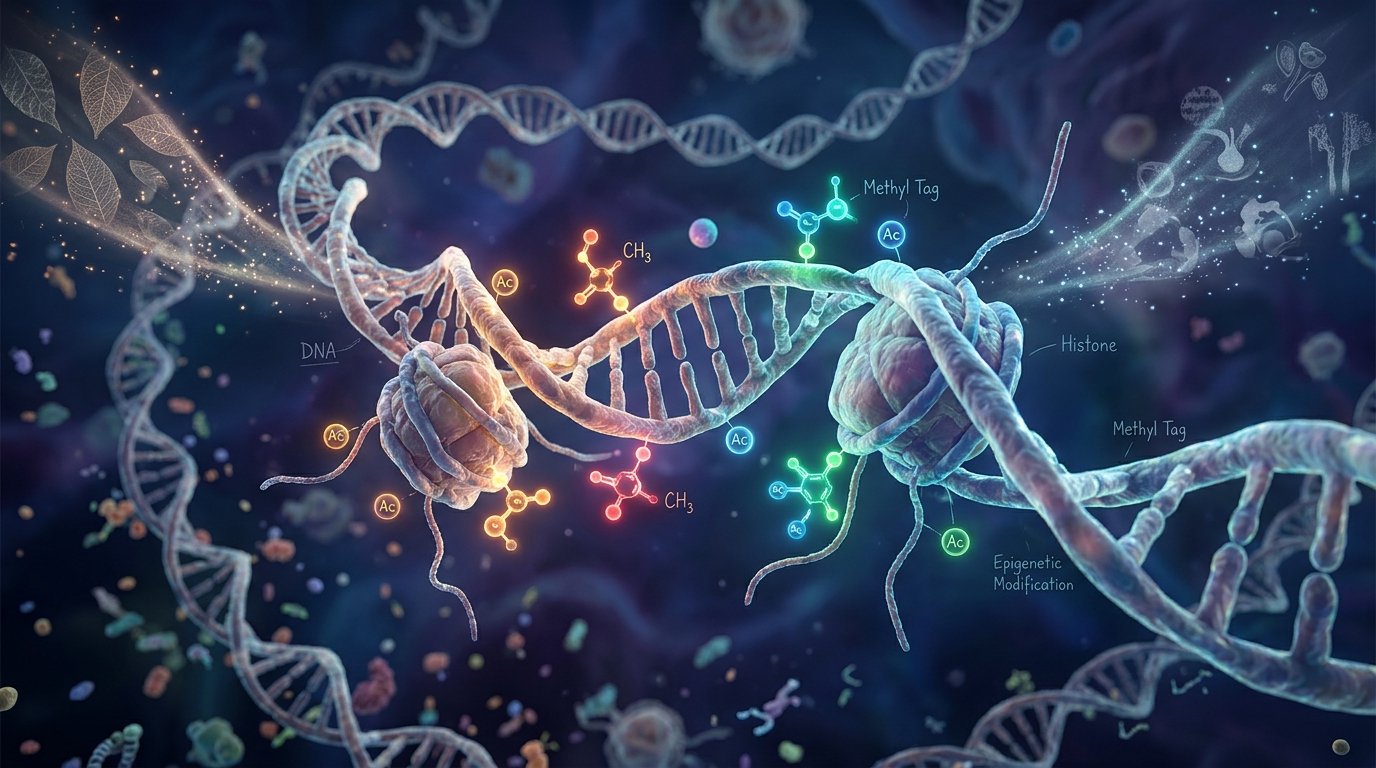
The human body contains an extraordinary amount of biological information. Every cell carries DNA, a molecular instruction system that helps determine how the body develops, functions, repairs itself, and responds to its surroundings. Yet having the same genetic information does not mean every cell behaves identically. A brain cell performs different tasks from a muscle cell, even though both contain essentially the same DNA.
This difference is partly explained by epigenetics, a fascinating field of biology that examines how genes are regulated without changing the underlying DNA sequence. The Czech and Slovak word epigenetický refers to something epigenetic, meaning related to the processes that influence how genetic information is used.
Epigenetics helps scientists understand why certain genes become active while others remain quiet, how cells develop specialized functions, and how environmental conditions may influence biological activity over time. It also offers new perspectives on aging, disease, nutrition, stress, development, and the relationship between genetics and everyday life.
Although epigenetics has attracted considerable attention in recent years, it is not a magical mechanism through which people can completely control their genes. Instead, it represents a complex biological system that works alongside genetics, cellular processes, and environmental influences.
Understanding epigenetics can help people appreciate how the body responds to its surroundings while recognizing the limits of current scientific knowledge.
What Does Epigenetický Mean?
The term epigenetický describes processes associated with epigenetics. The word combines the idea of something occurring beyond or alongside genetics with the study of inherited biological information.
In simple terms, epigenetics investigates how genes can be switched on, switched off, or adjusted in activity without changing the DNA sequence itself.
DNA contains genes that provide instructions for producing proteins and regulating various biological functions. However, the body does not need every gene to remain active all the time. Different tissues, developmental stages, and environmental circumstances require different patterns of gene activity.
Epigenetic mechanisms help control these patterns.
For example, genes responsible for producing certain proteins may be highly active in liver cells but largely inactive in skin cells. This regulation allows cells to develop specialized roles while preserving the same basic genetic blueprint.
Epigenetic changes may also occur throughout a person’s lifetime. Some are involved in normal development, while others respond to environmental conditions, aging, or cellular stress.
The central idea is that genes provide biological instructions, but the activity of those instructions can be regulated in several ways.
How Epigenetics Works
Epigenetic regulation involves molecular processes that influence how DNA is packaged, accessed, and interpreted by cellular machinery.
DNA is not simply floating freely inside the nucleus. It is organized around proteins called histones, forming a structure known as chromatin. The arrangement of this structure affects whether particular regions of DNA are easily accessible.
When DNA is tightly packed, certain genes may become less accessible to the machinery responsible for reading genetic information. When chromatin is more open, gene activity may become easier.
Epigenetic mechanisms help influence these arrangements.
Scientists commonly study several important mechanisms, including DNA methylation, histone modifications, chromatin remodeling, and regulatory RNA molecules.
These systems work together rather than operating independently. Their effects depend on the particular cell, the location within the genome, and the biological circumstances.
DNA Methylation
DNA methylation is one of the most widely studied epigenetic mechanisms.
It involves the addition of small chemical groups called methyl groups to DNA, commonly at specific sites involving cytosine bases. These modifications can influence whether certain genes are active or inactive.
In many situations, increased methylation near a gene’s promoter region is associated with reduced gene expression. However, the relationship is not universal. Methylation in other genomic regions may have different effects, which is why scientists must interpret these patterns carefully.
DNA methylation plays important roles in normal development, cellular identity, genomic stability, and the regulation of certain genetic processes.
It is also investigated in cancer research, aging studies, and the development of potential diagnostic tools.
Histone Modifications
Histones are proteins that help organize DNA into a compact structure.
Chemical modifications to histones can affect how tightly DNA is packaged and how accessible it becomes. Some modifications are associated with increased gene activity, while others are linked to gene suppression.
Common histone modifications include acetylation, methylation, phosphorylation, and other chemical changes.
Histone acetylation, for example, is often associated with a more open chromatin structure and increased gene activity. However, different modifications can have different effects depending on their location and combinations.
These changes help cells regulate gene expression without rewriting the DNA sequence.
Chromatin Remodeling
Chromatin remodeling involves changes in the organization of DNA and associated proteins.
Specialized molecular complexes can reposition or alter nucleosomes, making particular DNA regions more accessible or less accessible to cellular machinery.
This process is important because genes cannot be properly regulated if the relevant DNA sequences are permanently hidden within tightly packed chromatin.
Chromatin remodeling supports processes such as cell differentiation, DNA repair, transcription, and cellular responses to environmental signals.
Noncoding RNA
Not every RNA molecule is used to produce a protein.
Some RNA molecules help regulate gene activity. These include microRNAs and other noncoding RNAs that can influence gene expression by affecting RNA stability, translation, or interactions with regulatory proteins.
Certain noncoding RNAs also participate in chromatin regulation and help coordinate cellular processes.
This illustrates that epigenetic regulation is not limited to chemical modifications of DNA or histones. It also involves complex molecular networks that control how genetic information is used.
Epigenetics and the Development of Human Cells
One of the most remarkable examples of epigenetics occurs during human development.
An embryo begins with cells that have the potential to develop into many different types of tissues. As development progresses, cells gradually acquire specialized functions.
Some become neurons, others become muscle cells, blood cells, skin cells, or cells that form internal organs.
These cells generally retain the same DNA sequence, but they develop different patterns of gene activity.
Epigenetic regulation helps establish and maintain these differences.
For example, a developing neuron activates genes needed for communication between nerve cells while suppressing genes associated with unrelated cellular functions. A muscle cell develops its own pattern of gene activity that supports contraction, energy use, and structural organization.
This process is known as cellular differentiation.
Epigenetic mechanisms help maintain cellular identity over time. Without effective regulation, cells could lose important characteristics or activate genes in inappropriate circumstances.
During early development, epigenetic patterns undergo substantial changes. These changes help reset certain molecular marks, establish new regulatory patterns, and support the development of different tissues.
The study of these processes is important for developmental biology, regenerative medicine, stem cell research, and understanding certain congenital conditions.
The Relationship Between Epigenetics and Genetics
Genetics and epigenetics are closely connected, but they describe different aspects of biological information.
Genetics focuses primarily on the DNA sequence itself. Genetic variations may influence characteristics such as eye color, blood type, disease susceptibility, metabolism, and many other traits.
Epigenetics examines how biological systems regulate the activity of genetic information.
A genetic mutation changes the DNA sequence. An epigenetic modification generally changes how DNA is organized or used without changing its sequence.
Both processes can influence health and development.
A person may inherit a genetic variant that affects the activity of a particular protein. Epigenetic mechanisms may also influence how much of that protein is produced in certain tissues.
In some cases, genetic differences can influence epigenetic patterns. Likewise, epigenetic regulation can affect the biological consequences of genetic variations.
This relationship makes it difficult to separate genetics from epigenetics completely.
Rather than viewing them as competing explanations, researchers consider them complementary parts of a broader biological system.
Genetics helps explain what biological instructions are present. Epigenetics helps explain how those instructions are regulated in different cells and circumstances.
Environmental Factors That May Influence Epigenetics
Environmental conditions can influence epigenetic regulation. However, the effects are often complex, and researchers do not always know whether an observed epigenetic change causes a biological outcome or simply accompanies it.
Several environmental factors have received considerable scientific attention.
Nutrition and Dietary Patterns
Nutrition provides the body with energy, vitamins, minerals, amino acids, and other compounds needed for normal cellular activity.
Certain nutrients participate in biochemical pathways involved in methylation and other regulatory processes. Folate, vitamin B12, choline, and related nutrients are involved in pathways that support the production and transfer of methyl groups.
This does not mean that consuming large amounts of particular foods automatically improves epigenetic health.
The relationship between nutrition and gene regulation depends on many factors, including nutrient availability, metabolism, genetics, age, and overall dietary quality.
A balanced diet containing vegetables, fruits, legumes, whole grains, healthy fats, and adequate protein supports normal biological functions.
Researchers continue to investigate how dietary patterns influence epigenetic markers and whether these changes contribute to long-term health outcomes.
Physical Activity
Regular physical activity affects many biological systems, including cardiovascular health, metabolism, muscle function, inflammation, and hormonal regulation.
Studies have found that exercise may be associated with changes in epigenetic markers in certain tissues, including skeletal muscle.
These changes may be involved in how cells adapt to physical demands, manage energy, and respond to training.
Exercise-related epigenetic research is particularly interesting because it suggests that biological regulation can respond to repeated environmental signals.
Nevertheless, scientists are still investigating which changes are most important, how long they last, and whether they directly contribute to specific health benefits.
Stress and Psychological Experiences
Stress affects the body through multiple biological pathways, including hormonal systems, nervous system activity, and immune responses.
Researchers have investigated whether prolonged stress is associated with epigenetic changes involving genes related to stress regulation.
Some studies have examined methylation patterns associated with the body’s response to cortisol and other stress-related signals.
However, stress research is complicated. People experience different forms of stress, and biological responses vary according to age, duration, intensity, personal circumstances, and other factors.
Epigenetic findings should not be interpreted as proof that a person’s experiences permanently damage their genes.
Psychological well-being, social support, sleep, physical activity, and access to appropriate care remain important parts of overall health.
Sleep and Circadian Rhythms
Sleep is essential for normal brain function, metabolism, immune activity, and tissue recovery.
The body’s circadian rhythm regulates many biological processes according to approximately 24-hour cycles. These rhythms influence hormone production, body temperature, alertness, and cellular activity.
Research suggests that epigenetic regulation and circadian biology interact in several ways.
Changes in sleep patterns, shift work, and disruptions to the body’s natural rhythms are being investigated for their potential relationship with gene regulation.
Maintaining a regular sleep schedule and getting sufficient sleep can support general health, although the specific epigenetic effects of different sleep habits remain an active area of research.
Environmental Exposure
Environmental conditions may influence epigenetic patterns through several biological pathways.
Researchers study exposure to air pollution, tobacco smoke, certain chemicals, heavy metals, and other environmental factors.
Some exposures have been associated with changes in DNA methylation or other epigenetic markers.
The biological effects depend on the substance, exposure level, duration, timing, and individual characteristics.
Environmental epigenetics is an important field because it may help explain how exposure conditions contribute to differences in disease risk and biological development.
However, identifying an epigenetic association does not automatically establish that a particular exposure caused a disease.
Epigenetics and Aging
Aging is associated with numerous changes throughout the body, including alterations in cellular function, DNA repair, immune activity, metabolism, and tissue structure.
Epigenetic patterns also change as people age.
Scientists have observed age-associated changes in DNA methylation across different tissues. Some patterns appear relatively consistent across populations, making them useful for developing epigenetic clocks.
Epigenetic clocks are mathematical models that use specific molecular markers to estimate biological age or certain aspects of aging.
Chronological age refers to the number of years a person has lived. Biological age attempts to describe aspects of the body’s functional or molecular condition.
These measurements are not interchangeable.
An epigenetic clock may provide information about particular biological processes, but it does not necessarily represent a complete measurement of health, future lifespan, or disease risk.
Different clocks are designed for different purposes. Some estimate chronological age, while others focus on markers associated with mortality, health conditions, or aging-related changes.
Researchers are exploring whether epigenetic markers can help evaluate interventions designed to improve health or influence aging-related biological processes.
Although this research is promising, there is currently no universally accepted method for using epigenetic measurements to predict an individual’s lifespan with certainty.
Epigenetics and Disease
Epigenetic regulation is essential for normal biological function. When regulatory systems become disrupted, they may contribute to certain diseases.
Cancer is one of the most extensively studied examples.
Cancer cells can develop abnormal epigenetic patterns that influence genes involved in cell growth, DNA repair, cellular identity, and programmed cell death.
Some genes that normally help prevent uncontrolled cell growth may become silenced. Other genes may become active in inappropriate circumstances.
These changes can interact with genetic mutations and other cellular abnormalities.
Epigenetic alterations are also studied in neurological disorders, metabolic conditions, autoimmune diseases, and certain developmental disorders.
In neurological research, scientists examine whether epigenetic mechanisms contribute to learning, memory, neuronal function, and disease-related changes in the brain.
In metabolic research, investigations include the regulation of genes involved in energy
Explore more: Texas Medical Abbreviation: Meaning, Uses, and Examples











Discussion about this post