







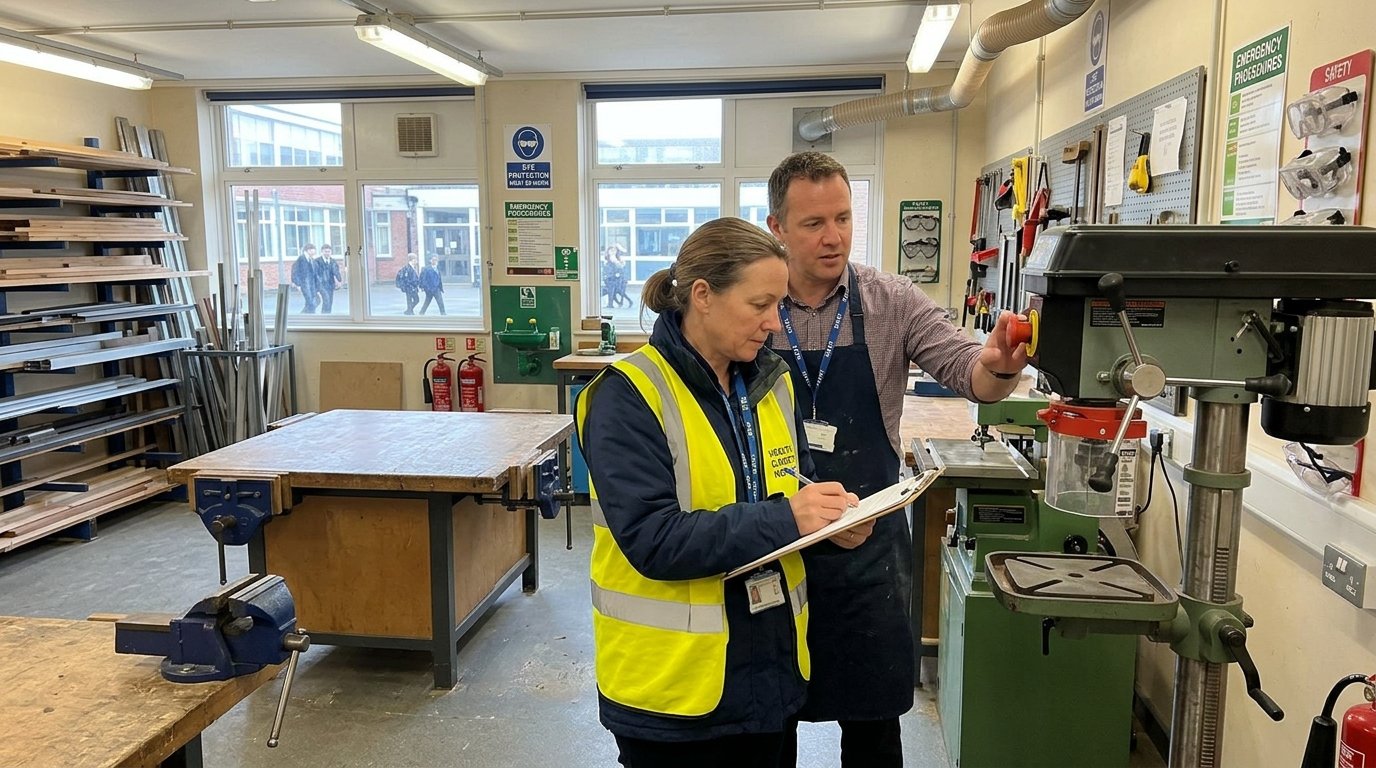
Schools are places where children learn, teachers develop young minds, and staff work together to create a supportive educational environment. While academic achievement is an important part of school life, maintaining a safe and healthy environment is equally essential. Every school has a responsibility to protect students, teachers, support staff, visitors, contractors, and anyone else who may be affected by its activities. This is where the Health and Safety Executive (HSE) plays an important role.
The Health and Safety Executive is Britain’s national regulator for workplace health and safety. It provides guidance, monitors compliance, investigates serious incidents, and works to reduce risks across different industries, including education. Although schools are not traditionally viewed as high-risk workplaces, they contain various potential hazards, from science laboratories and playground equipment to kitchens, maintenance areas, and busy corridors.
Understanding the Health and Safety Executive in schools helps educational institutions establish effective safety procedures and create an environment where everyone can feel protected. It also helps school leaders understand their responsibilities and make informed decisions about preventing accidents and work-related illnesses.
This guide explains the role of the HSE in education, the main health and safety responsibilities of schools, common risks, risk assessment procedures, staff training, and practical ways to improve safety standards.
What Is the Health and Safety Executive?
The Health and Safety Executive, commonly known as the HSE, is a government regulator responsible for protecting people from health and safety risks arising from work activities in Great Britain. Its work covers many sectors, including construction, manufacturing, agriculture, healthcare, and education.
In the education sector, the HSE provides information and guidance to help schools manage workplace risks. It also supports employers in understanding their legal duties and taking reasonable steps to protect employees and other people affected by their operations.
The HSE does not manage the everyday activities of individual schools. Instead, it establishes regulatory expectations, publishes practical guidance, and takes enforcement action when necessary.
Its main responsibilities include:
- Developing and communicating workplace health and safety guidance.
- Monitoring compliance with relevant health and safety legislation.
- Investigating serious workplace accidents and dangerous incidents.
- Identifying unsafe working practices and encouraging improvements.
- Providing information about risk management and accident prevention.
- Taking enforcement action when legal requirements are not met.
- Promoting a positive health and safety culture across different industries.
For schools, these responsibilities help establish a framework for managing risks and maintaining safe educational facilities.
Why Is Health and Safety Important in Schools?
A school environment includes many activities that require careful supervision and planning. Students move between classrooms, participate in sports, use equipment, attend practical lessons, and interact with other people throughout the day. Teachers and support staff also carry out responsibilities that can expose them to different workplace hazards.
Without suitable safety arrangements, even ordinary school activities can lead to injuries or health problems.
Effective health and safety management is important for several reasons.
Protecting Students
Children depend on adults to provide appropriate supervision and maintain safe surroundings. Schools must identify potential hazards and take reasonable precautions to prevent foreseeable injuries.
This includes maintaining playground equipment, keeping walkways clear, supervising practical activities, and ensuring that emergency arrangements are suitable for students of different ages and abilities.
Protecting Teachers and School Staff
Teachers, administrators, cleaners, kitchen workers, caretakers, and other employees can experience workplace risks. These may include slips, trips, manual handling injuries, exposure to cleaning chemicals, stress, and repetitive physical activities.
A well-managed safety system helps reduce these risks and supports employee wellbeing.
Creating a Better Learning Environment
Students are more likely to concentrate and participate when their surroundings are clean, organised, and secure. A safe learning environment also gives parents confidence that the school takes its responsibilities seriously.
Preventing Accidents and Disruptions
Accidents can interrupt lessons, affect attendance, create emotional distress, and result in additional costs. Preventive safety measures reduce the likelihood of these problems and help schools operate more smoothly.
Meeting Legal Responsibilities
Schools and their employers must comply with applicable health and safety legislation. Understanding the relevant requirements helps school management make appropriate arrangements and demonstrate that risks are being managed responsibly.
The Role of the HSE in Schools
The Health and Safety Executive contributes to school safety by providing regulatory oversight and practical information. Its role is not limited to responding when accidents happen. It also encourages organisations to identify hazards before they cause harm.
Providing Health and Safety Guidance
The HSE publishes guidance that helps employers understand workplace safety requirements. Schools can use this information when developing policies, reviewing procedures, and planning activities.
The guidance covers areas such as workplace conditions, hazardous substances, equipment safety, slips and trips, and employee welfare.
Supporting Risk Management
Risk management is a central part of workplace safety. Schools should identify hazards, evaluate the likelihood and seriousness of potential harm, and introduce suitable control measures.
The HSE promotes a sensible and proportionate approach. This means schools should focus on significant risks rather than creating unnecessary paperwork for ordinary activities.
Investigating Serious Incidents
When serious workplace accidents or dangerous incidents occur, the HSE may investigate to establish what happened and whether relevant legal duties were fulfilled.
An investigation can identify failures in safety arrangements and help prevent similar incidents in the future.
Enforcing Health and Safety Law
The HSE has enforcement powers under relevant legislation. Depending on the circumstances, it may provide advice, issue improvement notices, issue prohibition notices, or pursue prosecution.
These actions are intended to address serious safety concerns and encourage compliance with the law.
Encouraging Workplace Safety Awareness
The HSE promotes awareness of workplace hazards and responsible working practices. Schools can use its resources to improve staff knowledge, strengthen safety procedures, and encourage employees to report concerns.
Who Is Responsible for Health and Safety in Schools?
Health and safety is a shared responsibility, but the legal duties of different individuals depend on their roles and the organisation’s structure.
In England, schools may operate under local authorities, academy trusts, independent governing bodies, or other employers. The employer is generally responsible for ensuring that appropriate health and safety arrangements are in place.
School Employers
The employer has primary responsibility for protecting employees and others who may be affected by the school’s activities.
Its responsibilities may include:
- Establishing suitable health and safety policies.
- Providing safe buildings and working environments.
- Arranging appropriate risk assessments.
- Maintaining equipment and facilities.
- Providing necessary information, instruction, and training.
- Ensuring suitable emergency procedures.
- Monitoring safety performance and addressing identified problems.
Headteachers and Senior Leaders
Headteachers and senior management teams play an important role in implementing the employer’s safety arrangements.
They help ensure that policies are followed, staff understand their responsibilities, and identified hazards receive appropriate attention.
They may also coordinate inspections, review accident reports, and communicate safety concerns to the employer or governing body.
Governors and Trustees
School governors and trustees generally have an oversight role. They should understand the school’s health and safety arrangements and seek assurance that appropriate systems are operating effectively.
Their precise responsibilities depend on the school’s legal structure and governance arrangements.
Teachers and Employees
Teachers and other employees must take reasonable care of their own health and safety and avoid putting other people at risk through their actions.
They should follow safety instructions, use equipment properly, report hazards, and cooperate with their employer’s safety arrangements.
Parents and Visitors
Parents, visitors, and contractors should follow the school’s relevant safety instructions. Visitors may need to sign in, wear identification, follow access arrangements, or receive additional instructions when entering restricted areas.
Common Health and Safety Risks in Schools
Schools contain a wide range of potential hazards. The risks differ depending on the building, age group, facilities, and activities taking place.
Identifying common hazards helps schools introduce appropriate preventive measures.
Slips, Trips, and Falls
Slips, trips, and falls are among the most common accident risks in educational environments.
Wet floors, loose carpets, damaged steps, trailing cables, uneven outdoor surfaces, and cluttered corridors can create dangerous conditions.
Schools can reduce these risks by:
- Cleaning spills promptly.
- Using warning signs when floors are wet.
- Keeping corridors and stairways clear.
- Repairing damaged flooring.
- Providing suitable lighting.
- Inspecting outdoor paths and playground surfaces.
Science Laboratory Safety
Science laboratories require additional safety precautions because students and teachers may work with chemicals, glassware, heat sources, and specialist equipment.
Schools should establish clear laboratory rules and ensure that students receive suitable instructions before practical activities begin.
Important safety measures include appropriate supervision, safe chemical storage, suitable protective equipment, emergency washing facilities where required, and clear procedures for handling spills or accidents.
Teachers should also ensure that laboratory equipment is maintained and used according to the manufacturer’s instructions.
Playground and Sports Safety
Physical education and outdoor play are valuable parts of school life, but they can involve risks such as collisions, falls, damaged equipment, and injuries during physical activities.
Schools should inspect sports facilities and playground equipment regularly. Damaged items should be removed from use until suitable repairs have been completed.
Teachers should provide appropriate supervision and adapt activities to the age, abilities, and needs of participating students.
Fire Safety
Fire safety is an essential part of school management. Buildings may contain electrical equipment, heating systems, kitchens, storage areas, and other potential sources of ignition.
Schools should maintain suitable fire safety arrangements, including:
- Appropriate fire risk assessments.
- Clearly marked escape routes.
- Suitable fire detection and alarm systems.
- Accessible fire exits.
- Emergency evacuation procedures.
- Regular fire drills.
- Appropriate staff training.
Emergency plans should also consider students and visitors who may require additional assistance during an evacuation.
Electrical Safety
Classrooms, offices, laboratories, kitchens, and other school facilities use electrical equipment every day.
Damaged cables, faulty plugs, overloaded sockets, and poorly maintained appliances can create risks of electric shock or fire.
Schools should ensure that electrical installations and equipment are maintained appropriately. Staff should report visible damage, avoid using defective equipment, and follow relevant instructions for electrical safety.
Kitchen and Food Preparation Risks
School kitchens can involve hot surfaces, sharp tools, boiling liquids, cleaning chemicals, and food-related hazards.
Kitchen staff should receive suitable training and follow established procedures for food hygiene, equipment use, cleaning, and safe storage.
Floors should be kept clean and dry where possible, and access to kitchen areas should be controlled appropriately.
Manual Handling
School employees may need to move furniture, books, supplies, sports equipment, cleaning materials, and other objects.
Incorrect lifting techniques or handling loads that are too heavy can cause back injuries and muscle strains.
Employers should assess relevant manual handling tasks and consider whether the work can be avoided, reduced, or carried out using suitable equipment. Staff should receive appropriate instruction where manual handling risks are present.
Cleaning Chemicals
Cleaning products are used throughout schools to maintain hygiene. However, some substances can irritate the skin, damage the eyes, or cause breathing difficulties.
Schools should identify hazardous substances, follow relevant safety information, provide appropriate protective equipment, and ensure chemicals are stored securely.
Employees should never mix cleaning products unless the manufacturer specifically confirms that it is safe to do so.
Understanding Risk Assessments in Schools
A risk assessment is a systematic process used to identify hazards and determine what needs to be done to prevent harm.
Under the Management of Health and Safety at Work Regulations 1999, employers must make suitable and sufficient assessments of risks to employees and others who may be affected by their work activities.
Schools should carry out risk assessments that reflect their actual circumstances rather than relying on generic documents that do not address specific hazards.
Step 1: Identify Potential Hazards
The first step is to identify anything that could cause harm.
Examples include wet floors, unsafe equipment, chemicals, fire hazards, poor lighting, and activities involving physical contact.
School staff can help identify hazards because they understand how different areas are used throughout the day.
Step 2: Identify Who Could Be Harmed
Schools should consider everyone who may be affected by a particular hazard.
This can include students, teachers, cleaners, kitchen employees, maintenance workers, visitors, and contractors.
Additional consideration may be needed for younger children, students with disabilities, or individuals who require specific support.
Step 3: Evaluate the Risks
After identifying hazards, the school should consider how likely an accident or exposure is and how serious the potential consequences could be.
This helps management decide which risks require immediate attention and which can be controlled through routine arrangements.
Step 4: Introduce Control Measures
Schools should identify practical measures that can eliminate or reduce risks.
For example, a damaged staircase may require immediate repair, while a laboratory activity may need additional supervision and protective equipment.
Control measures should be suitable for the actual hazard and should not rely entirely on students or employees remembering warnings.
Step 5: Record Significant Findings
Employers must record the significant findings of risk assessments when required by law. In workplaces with five or more employees, significant findings must be recorded.
Written records should explain the main hazards, who may be affected, the control measures in place, and any further actions required.
Step 6: Review and Update Assessments
Risk assessments should be reviewed when there is a reason to believe they are no longer valid or when significant changes occur.
Examples include building renovations, new equipment, changes to school activities, accident investigations, or the introduction of new substances.
Regular reviews help ensure that safety arrangements remain relevant.
Health and Safety Policies in Schools
A health and safety policy explains how an organisation intends to manage workplace safety and who is responsible for different activities.
For schools, it provides a consistent framework for staff, leadership teams, and other relevant individuals.
A suitable policy generally includes three important elements.
Statement of Intent
This section explains the employer’s commitment to protecting employees, students, visitors, and others affected by school activities.
It should communicate the organisation’s overall approach to health and safety.
Organisation and Responsibilities
This section identifies the people responsible for managing and implementing safety arrangements.
It may explain the responsibilities of employers, headteachers, managers, teachers, support staff, and other relevant employees.
Arrangements for Managing Safety
This section explains the practical procedures used to control risks.
It may cover fire safety, first aid, accident reporting, workplace inspections, risk assessments, equipment maintenance, emergency planning, and staff training.
The policy should be communicated to relevant employees and reviewed when necessary.
Staff Training and Health and Safety Awareness
Training is essential because employees need to understand the hazards associated with their work and know how to respond appropriately.
A school may have excellent safety policies, but these arrangements will not be effective if employees do not understand them.
Training should reflect the duties and responsibilities of each employee.
General Safety Induction
New employees should receive information about important school safety arrangements.
This may include emergency procedures, fire exits, accident reporting, first aid arrangements, safeguarding-related site procedures, and the process for reporting hazards.
Fire Safety Training
Staff should understand what to do when a fire alarm sounds, how evacuation procedures operate, and where students should assemble.
Employees with specific emergency responsibilities may require additional instruction.
First Aid Awareness
School staff should understand how to obtain assistance when a student or colleague becomes injured or unwell.
Schools must make suitable first aid arrangements based on their needs and circumstances. This includes providing appropriate equipment, facilities, and personnel.
Specialist Training
Some roles require additional training because of their activities.
Examples include laboratory work, food preparation, maintenance, cleaning, manual handling, and the use of specialist equipment.
Training should be updated when working practices change or when an assessment identifies a need for further instruction.
Fire Safety and Emergency Planning
Emergency planning helps schools respond effectively when unexpected situations occur.
Although fire is an important concern, schools should also consider other emergencies, including serious accidents, severe weather, gas leaks, and building-related incidents.
A suitable emergency plan should identify the actions staff must take, communication arrangements, evacuation routes, assembly points, and responsibilities during an incident.
Schools should ensure that emergency arrangements are understood by employees and communicated to students in an age-appropriate way.
Practice drills can help identify weaknesses in evacuation procedures and improve familiarity with emergency instructions.
Where students or visitors require additional assistance, the school should consider suitable arrangements in advance.
Managing Health and Wellbeing in Schools
Health and safety is not limited to preventing physical injuries. Employee wellbeing is also an important consideration.
Teachers and other school employees may experience work-related stress because of workload, challenging behaviour, time pressures, administrative responsibilities, and difficult working conditions.
Employers should consider these factors when managing workplace risks.
Practical measures may include:
- Reviewing workloads and working arrangements.
- Providing clear job responsibilities.
- Encouraging communication between employees and managers.
- Supporting staff who experience workplace difficulties.
- Addressing bullying and inappropriate behaviour.
- Providing access to relevant support services.
- Monitoring working conditions and employee concerns.
A positive workplace culture can improve morale, support staff retention, and contribute to a healthier educational environment.
Managing Health and Safety for Students with Additional Needs
Every student should be able to participate in school activities as safely as possible. However, some children may require additional arrangements because of disabilities, medical needs, mobility difficulties, sensory requirements, or other individual circumstances.
Schools should consider these needs when planning activities, assessing risks, and developing emergency procedures.
For example, a student with limited mobility may require an appropriate evacuation arrangement. A child with a medical condition may need an agreed healthcare plan and access to relevant support.
The purpose of these arrangements is not to exclude students from educational opportunities. Instead, schools should identify reasonable adjustments and practical safeguards that support participation while managing foreseeable risks.
Accident Reporting and Incident Management
Accidents and near misses provide important information about the effectiveness of school safety arrangements.
Schools should establish a clear procedure for reporting, recording, and reviewing incidents.
An effective accident management process generally includes:
- Providing immediate assistance to anyone who has been injured.
- Arranging medical support when necessary.
- Making the area safe to prevent further harm.
- Recording the relevant details of the incident.
- Investigating what happened and identifying contributing factors.
- Introducing corrective actions where required.
- Reviewing existing risk assessments and procedures.
Certain work-related incidents must be reported to the relevant enforcing authority under the Reporting of Injuries, Diseases and Dangerous Occurrences Regulations 2013, commonly known as RIDDOR.
Reportable incidents can include specified serious injuries, work-related deaths, and certain dangerous occurrences. The reporting requirements depend on the circumstances, including the nature of the incident and the status of the injured person.
Schools should consult official HSE guidance to determine whether an incident is reportable.
How Schools Can Improve Their Health and Safety Standards
Maintaining a safe school environment requires ongoing attention rather than a one-time inspection.
School leaders can improve safety performance through consistent monitoring, employee involvement, and practical improvements.
Conduct Regular Inspections
Routine inspections help identify hazards before they cause accidents.
Schools should pay attention to classrooms, corridors, stairways, playgrounds, sports facilities, laboratories, kitchens, storage rooms, and outdoor areas.
Inspection findings should be recorded and followed up appropriately.
Encourage Staff to Report Hazards
Employees often notice problems during their daily activities. Schools should make it easy for staff to report damaged equipment, unsafe conditions, and near misses.
Management should respond to reports promptly and communicate what action has been taken.
Maintain Buildings and Equipment
Preventive maintenance helps reduce the risk of equipment failure and unsafe building conditions.
Schools should arrange suitable checks and repairs for heating systems, electrical installations, playground equipment, furniture, sports facilities, and other relevant assets.
Review Safety Procedures
Policies and procedures should be reviewed when changes occur or when incidents reveal weaknesses.
Schools should avoid keeping outdated documents that no longer reflect actual working practices.
Involve Employees in Safety Decisions
Teachers and support staff understand the practical challenges of their working environments.
Involving employees in safety discussions can help schools identify realistic improvements and develop procedures that are easier to follow.
Build a Positive Safety Culture
Safety should be part of everyday school operations.
When school leaders demonstrate responsible behaviour, provide suitable resources, and respond to concerns, employees are more likely to take safety seriously.
The Difference Between the HSE and Other School Safety Authorities
The Health and Safety Executive is an important workplace safety regulator, but it is not the only organisation involved in school safety.
Understanding the responsibilities of different authorities helps schools know where to seek appropriate guidance.
The HSE regulates workplace health and safety in many sectors. However, local authorities may act as enforcing authorities for certain categories of premises and activities, depending on the relevant legal arrangements.
The Department for Education provides guidance and information for schools in England, including material relating to school premises and health and safety management.
Fire and rescue authorities have responsibilities relating to fire safety enforcement under the Regulatory Reform (Fire Safety) Order 2005 in England and Wales.
Other organisations may also have responsibilities relating to food hygiene, building standards, education, safeguarding, and public health.
Schools should identify the relevant authorities for their location and circumstances rather than assuming that every safety issue is handled by the HSE.
Important Health and Safety Laws Relevant to Schools
Schools in Great Britain must understand the legislation relevant to their operations.
Some of the important legal frameworks include:
Health and Safety at Work etc. Act 1974: Establishes general duties for employers to protect employees and others who may be affected by their work activities.
Management of Health and Safety at Work Regulations 1999: Requires employers to assess risks, implement appropriate preventive measures, and establish suitable health and safety arrangements.
Reporting of Injuries, Diseases and Dangerous Occurrences Regulations 2013: Sets out requirements for reporting specified work-related injuries, diseases, deaths, and dangerous occurrences.
Control of Substances Hazardous to Health Regulations 2002: Covers the assessment and control of exposure to hazardous substances.
Manual Handling Operations Regulations 1992: Addresses risks associated with manual handling activities.
Workplace (Health, Safety and Welfare) Regulations 1992: Establishes requirements relating to workplace conditions and welfare.
Regulatory Reform (Fire Safety) Order 2005: Establishes fire safety duties for relevant non-domestic premises in England and Wales.
The precise application of these laws depends on the circumstances. Schools should use current official guidance and obtain competent advice when necessary.
Common Health and Safety Mistakes Schools Should Avoid
Even schools with established safety policies can make mistakes that increase the likelihood of accidents.
Some common problems include:
- Treating risk assessments as paperwork rather than practical safety tools.
- Failing to repair damaged equipment promptly.
- Allowing emergency exits or corridors to become obstructed.
- Providing insufficient training for specialist activities.
- Ignoring repeated reports of minor hazards.
- Failing to review procedures after significant incidents.
- Storing cleaning chemicals in unsuitable or accessible locations.
- Not considering the additional needs of certain students.
- Assuming that safety is solely the responsibility of one employee.
- Keeping outdated policies and emergency instructions.
Avoiding these mistakes requires strong leadership, effective communication, and a commitment to continuous improvement.
The Benefits of a Strong Health and Safety Culture
A strong safety culture benefits everyone involved in education.
For students, it provides a safer environment in which they can learn, participate, and develop confidence.
For teachers and other employees, it helps reduce workplace injuries, improve wellbeing, and create clearer expectations.
parents, it demonstrates that the school takes its responsibilities seriously.
For school management, it supports better organisation, more effective risk management, and improved compliance with relevant legal duties.
Perhaps most importantly, a positive safety culture encourages people to identify problems before they become serious incidents.
Frequently Asked Questions
What Does the Health and Safety Executive Do for Schools?
The HSE regulates workplace health and safety in Great Britain. It provides guidance, monitors compliance, investigates certain serious incidents, and enforces relevant legislation. Schools can use its resources to understand their responsibilities and improve workplace safety.
Are Schools Required to Have a Health and Safety Policy?
Employers must have a written health and safety policy when they employ five or more employees. Schools should ensure that their policy explains responsibilities and practical safety arrangements and is communicated to relevant staff.
Who Is Responsible for Health and Safety in a School?
The employer has primary legal responsibility for ensuring suitable health and safety arrangements. Headteachers, managers, governors, trustees, and employees also have responsibilities according to their roles and applicable legal duties.
Do Schools Need to Carry Out Risk Assessments?
Yes. Employers must carry out suitable and sufficient assessments of risks arising from their work activities. Schools should assess significant hazards and introduce appropriate control measures.
Does the HSE Inspect Every School?
No. The HSE does not routinely inspect every school. Enforcement arrangements depend on the type of premises and the activities involved. Other enforcing authorities may have responsibility for certain schools and workplace activities.
What Is RIDDOR in Schools?
RIDDOR is the Reporting of Injuries, Diseases and Dangerous Occurrences Regulations 2013. It requires certain work-related incidents to be reported to the relevant enforcing authority when the legal reporting criteria are met.
How Often Should School Risk Assessments Be Reviewed?
There is no single review period that applies to every school risk assessment. Employers should review assessments when there is reason to believe they are no longer valid or when significant changes occur. Regular monitoring is also important.
Why Is Staff Training Important for School Safety?
Staff training helps employees understand workplace hazards, follow safety procedures, use equipment correctly, and respond appropriately during emergencies. Training should reflect the responsibilities and risks associated with individual roles.
Conclusion
The Health and Safety Executive plays an important role in promoting workplace safety across Great Britain, including the education sector. Through guidance, regulatory oversight, investigations, and enforcement, it helps establish standards that protect employees and others affected by workplace activities.
For schools, effective health and safety management involves much more than meeting legal requirements. It requires identifying hazards, completing suitable risk assessments, maintaining facilities, providing staff training, preparing for emergencies, and responding appropriately to accidents.
Employers, headteachers, teachers, governors, and support staff all contribute to maintaining safe educational environments. When everyone understands their responsibilities and works together, schools can reduce preventable risks and provide better conditions for learning and working.
Ultimately, a safe school is built through consistent effort, responsible leadership, and a shared commitment to protecting people. By following relevant HSE guidance and reviewing their safety arrangements regularly, educational institutions can create environments where students and employees feel supported, confident, and secure.
Explore more: Orlando Health MyChart: Your Guide to Patient Portal Access!












Discussion about this post